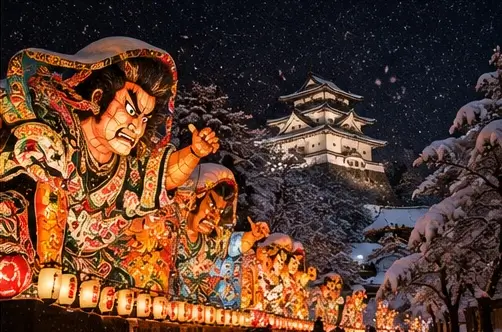
Snow country, slow trains

Three weeks on the local lines north — Niigata to Aomori — where the timetables thin out, the carriages empty, and the snow does most of the talking.
country
Niigata → Aomori · February

Everyone who rides this line north knows the sentence — the one about the train, the long tunnel, and the snow country waiting on the far side. You don't quite believe it until the daylight comes back white, the windows fog with the breath of the few passengers left aboard, and the announcements start naming places you've only ever read about.

I had three weeks, no real plan, and a quiet preference for the trains nobody recommends. Not the bullet trains, with their sealed hush and their bento trolleys, but the two-carriage locals that wait at empty platforms while a single school kid climbs aboard, stamp their feet against the cold, and carry on.

  • 越後湯沢
  • Echigo-Yuzawa

Into the white

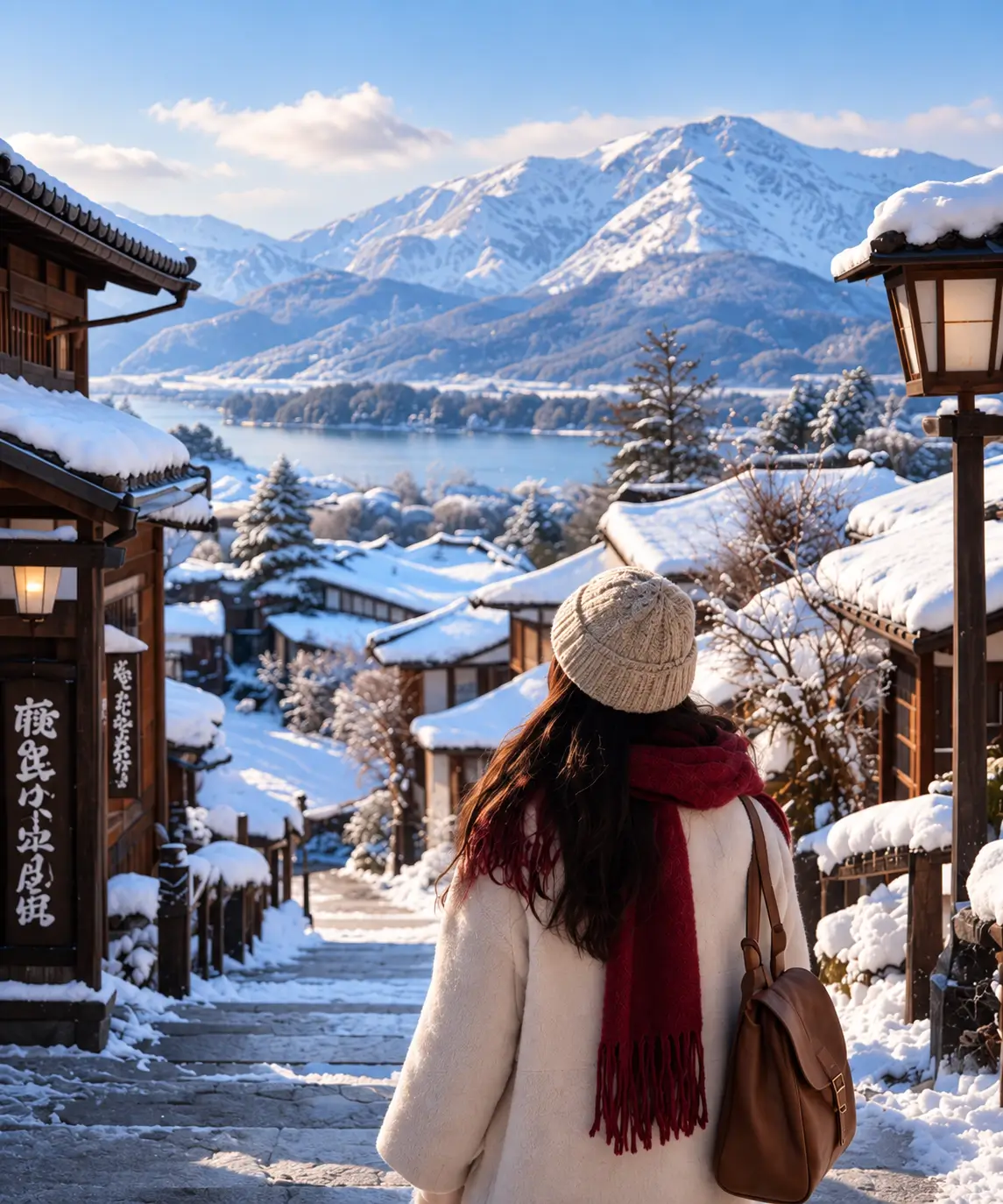
The snow in Echigo-Yuzawa isn't weather so much as architecture. It piles to the second-floor windows, gets cut back from the doorways each morning by hand, and decides — politely, but firmly — where a person is allowed to walk. The town arranges itself around it. Narrow channels of cleared pavement, steam rising from a public bath, the smell of someone's dinner held close by the cold air.

I spent the first night under a kotatsu with a flask of the local sake, the kind that tastes faintly of the rice it came from, listening to snow slide off a roof somewhere with a sound like a slow exhale. There was nowhere to be. That turned out to be the whole point.

The trains here don't run to a clock so much as to a mood. You learn to read the weather the way the conductor does, and to be unbothered when the answer is "not today."

04_kyoto_before_seven
Snow eaves, cut back by hand each morning

Echigo-Yuzawa at first light. The cleared channels reset overnight, every night, all winter.

  • 只見線
  • The Tadami Line

The slow crossing

The Tadami Line is, by general agreement, one of the great train rides in the country, and in February it is nearly empty. It threads through the mountains on a string of bridges, crossing and recrossing a river the colour of weak tea, the snow stacked so deep on the banks that the water looks like it's running through a trench cut in cake.

For most of the crossing I had the rear carriage to myself. The conductor came through once, punched nothing, and stood for a while at the back window watching the line unspool behind us. Neither of us said much. There wasn't a great deal to add.

  • 五能線
  • The Gonō Line

Where the snow meets the sea

By the time the Gonō Line carried me up the coast toward Aomori, the snow had picked a fight with the Sea of Japan. Grey waves, grey sky, a thin white shoreline holding the two apart, and the little train running the seam between them. Now and then the cloud would tear open and the whole carriage would fill with a hard, clean light, and then close again.

Aomori arrived the way the end of a long journey often does — quietly, and slightly before I was ready. I stepped onto the platform, the cold went straight through my coat, and somewhere behind me the two-carriage local sat ticking as it cooled, already, I suppose, waiting for whoever rode it next.

  • 案内
  • The practical bit
Getting there

Tokyo to Echigo-Yuzawa is about 75 minutes on the Jōetsu Shinkansen; the local lines take over from there.

The lines

Tadami Line (Aizu-Wakamatsu ↔ Koide) and the Gonō Line (Higashi-Noshiro ↔ Kawabe), both local, both slow on purpose.

When to go

Late January to February for the deepest snow. Check for weather suspensions before you commit to a connection.

Where to stay

A ryokan in Echigo-Yuzawa for the baths; a family minshuku in the Aizu valleys for the quiet.

dummy-author-image

Ellie

Has been riding Japan's local lines, off and on, for a decade — usually in the wrong season, always with too much camera gear and not enough gloves.

More

関連

お便り A letter, now and then

Liked this? There's a letter for that.

Once or twice a month I send a short note: somewhere I've been, a few photographs, and one small thing worth the detour. Nothing more, and easy to leave whenever you like.

Scroll to Top